about
Transmission Oil Coolers
A transmission oil cooler is the vehicle system's behind-the-scenes hero, working quietly to keep transmission fluid at a safe operating temperature. As leading transmission oil cooler manufacturers we ensure this heat exchanger keeps the excessive heat buildup that can quickly lead to transmission damage at bay, providing consistent performance while significantly extending the life of one of your vehicle's most expensive components.
Purpose of the Transmission Oil Cooler
The main job of transmission oil coolers is straightforward but critical—they pull excess heat away from transmission fluid during engine operation. Without cooling, the extreme heat generated during driving (especially under heavy loads) would quickly destroy the fluid's properties and even lead to costly transmission failure. By keeping temperatures in check, these cooling systems keep your transmission shifting smoothly and protect internal components from premature wear.
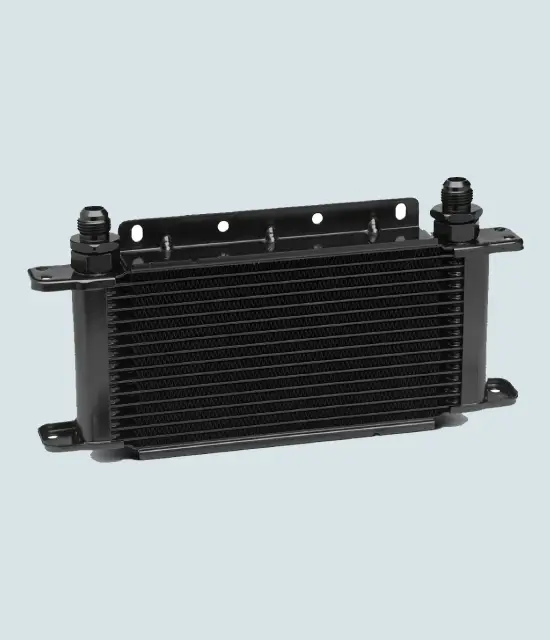
Working Principle of a
Transmission Oil Cooler
Heat Exchange
- Since your transmission heats up when in service, the heated fluid passes through the transmission oil cooler, navigating through a grid of specially shaped tubes or fins. Top manufacturing companies of transmission oil coolers design these for maximum surface contact to efficiently channel heat away from the fluid.
Airflow
- When the hot fluid flows through the cooler transmission system, surrounding air circulates across its outer surfaces. This endless airflow—whether from the forward motion of your vehicle or from accessory cooling fans—drives out the trapped heat, effectively cooling the fluid temperature.
Return to Transmission
- After it has unloaded its heat load, the cooled transmission fluid is circulated back to the main transmission assembly. This continuous circulation creates a thermal management cycle that keeps your transmission at optimal temperature levels even during harsh driving conditions like towing or driving up steep inclines.
Components of Transmission Oil Cooler
Inlet and Outlet Lines
Hoses that connect the cooler to the transmission, allowing fluid to flow in and out.
Mounting Bracket
Secures the cooler in place, often located in front of the radiator.
Cooler Core
The main body where heat exchange occurs, typically made of aluminum or copper.
Benefits of Transmission Oil Cooler
Prevents Overheating
Keeps transmission fluid at optimal temperatures, reducing the risk of overheating.
Improves Performance
Maintains consistent shifting and overall vehicle performance.
Extends Transmission Life
Lower operating temperatures contribute to a longer lifespan for the transmission.
The transmission oil cooler operates by circulating transmission fluid through a series of tubes or fins. If you have any more questions or need further details, feel free to ask!
Testimonials
Recently we bought a Radiators for our Generator. The Product Quality is Excellent .This Company produces custom made Radiators and Spares too. High Quality Products and Service Support.
krishna
CLEANTEK
We got support from ark engineering wonderful work done.He given idea for money save in genset. Ark engineering owner wonderful person.i will strongly recommend to ark engineering.
R.Prasannavenkatesh
Laser Experts India
Coimbatore
We have taken the services of the ark engineering for the service of our genset radiators.it was great Service at a better price .really professional and technical.
Suresh V
FAQ'S
How do I know if my transmission oil cooler is failing?
Signs of a failing cooler may include overheating, fluid leaks, or erratic shifting behavior.
Can I drive without a transmission oil cooler?
While it’s possible, it’s not advisable, as it can lead to overheating and potential damage to the transmission..
A transmission oil cooler necessary for all vehicles?
While not all vehicles require a cooler, high-performance or towing vehicles greatly benefit from having one to manage increased heat.